
You Replaced the Manager. Why Does the Problem Keep Coming Back?
When the same problem returns with different people, your construction company may be fixing people when it should be fixing the system.
It was early morning in Luanda when my office phone rang.
It was Fernando Braga.
Behind his voice, I could hear a concrete mixer running.
If you have spent enough years on construction sites, you know what that sound can mean in a phone call like that. Concrete is about to be placed, and depending on what is happening in the field, the clock is already running.
Fernando was in Viana, on the industrial outskirts of Luanda, where we were building an industrial bakery.
He got straight to the point.
“Renato, I need you to come to Viana. Now.”
I had known Fernando for many years. If he was asking me to cross Luanda immediately, there was a reason.
When I arrived at the site, I understood.
One of the foundation beams had been reinforced incorrectly.
Fernando had identified the problem the day before, shown it to the foreman, and instructed him to redo the reinforcement.
The foreman said he would.
He didn’t.
When Fernando returned the next morning to inspect the beam before the concrete pour, he found it exactly as it had been the day before.
Worse, they were preparing to pour.
This was no longer simply an execution mistake.
Someone had made a conscious decision to move forward with something they knew was wrong.
My first decision was simple:
Stop the pour.
The reinforcement would be redone, and no concrete would go into that form until it had been inspected again.
That was the technical correction.
Later, after the immediate situation was under control and without making a personnel decision in the heat of the jobsite, came the human correction.
The foreman was let go.
At that point, we could easily have considered the problem solved.
The beam had been corrected.
The person responsible had been removed.
The project could continue.
But there was still one question we had not answered:
What was it about our system that had allowed this to almost happen?
Fixing the person is not the same as fixing the company
That distinction stayed with me.
When something goes wrong inside a company, our natural reaction is to find the person responsible.
Who approved it?
Who failed to check it?
Who should have reported it?
Who allowed it to happen?
Sometimes there is clear individual responsibility. In Viana, there was.
But identifying the person does not necessarily eliminate the condition that allowed the problem to happen.
You can fire a project manager.
Replace an engineer.
Hire a new purchasing manager.
Bring in a different CFO.
Change the superintendent.
And six months later, discover that the same problem is back.
Only the name of the person involved has changed.
In my book Close Enough to Lead, I describe three levels of correction: technical, human, and systemic.
The technical correction fixes what went wrong.
The human correction addresses the responsibility of the people involved.
The systemic correction asks a different question:
What needs to change inside the organization so this is less likely to happen again?
That third question is the one many companies fail to ask.
When the problem changes names but never disappears
Over more than 30 years leading companies and projects, I have seen this pattern appear in many forms.
A project manager is replaced because problems reach senior leadership too late.
A new manager comes in.
A few months later, problems are still arriving too late.
A purchasing manager is blamed for too many emergency purchases.
The company replaces the purchasing manager.
The emergency purchases continue.
The finance team cannot produce a reliable cash forecast.
Someone new takes over.
The company still cannot see its cash position far enough ahead.
The head of operations is considered too centralized.
Someone else assumes the role.
Before long, the CEO is still being pulled into almost every important decision.
It is tempting to conclude that the company made two or three bad hires in a row.
That can happen.
But there is another possibility worth considering:
Different people may be operating inside a structure that keeps producing the same result.
At some point, continuing to replace people stops being correction.
It becomes repetition.
In 2017, I realized the problem could also be me
Three years after the incident in Viana, I was in Hollywood, Florida.
At the time, I was dividing my life between the United States and Angola, spending roughly 20 days in Luanda and 20 days away.
While reviewing three recent operational issues, I noticed something that bothered me.
The technical corrections were happening.
But some decisions were taking weeks. In one case, almost three months.
In 2014, the situation in Viana had been resolved quickly.
By 2017, issues requiring decisions were sitting unresolved.
Why?
Had our managers become less capable?
Had the problems become more difficult?
No.
What had changed was my presence.
When I was in Luanda, decisions happened.
When I was in the United States, certain issues entered an informal queue and waited for me to return.
It was uncomfortable to recognize this because blaming the managers would have been much easier.
But the problem was in the architecture of the company.
Our speed of correction depended on my physical presence.
I had not built an organization capable enough to reproduce that speed when I was not there.
That realization eventually led me to a principle I wrote about years later:
The speed of correction has to live in the system, not in the CEO.
Great people can hide weak systems
This is one of the paradoxes of a growing company.
A highly capable person can compensate for a weak structure for a very long time.
A great construction executive personally keeps track of everything.
An experienced CFO carries dozens of critical pieces of information in his or her head.
An exceptional purchasing manager knows exactly who to call when something goes wrong.
A strong project manager solves problems before they ever reach the CEO.
As long as those people are there, the company works.
And because it works, there is little urgency to turn what they know and do into organizational capability.
The problem appears when the company grows, complexity increases, or that person leaves.
What looked like organizational capability turns out to have been individual capability.
There is a significant difference between the two.
A strong company is not one where exceptional people solve everything.
It is one where exceptional people help build an organization that becomes stronger around them.
What changed after Viana
Years later, I found myself thinking again about that foundation beam.
Fernando found the mistake because he decided to inspect the reinforcement before the concrete pour.
But another question started bothering me:
What if Fernando had not checked?
The answer was obvious.
The beam probably would have been poured incorrectly.
Which meant that even though we had handled the situation correctly, a weakness remained.
The protection of that critical point depended on the judgment of one individual.
And individual judgment, no matter how good, is not a system.
We turned that experience into a procedure.
Foundation reinforcement had to go through two independent, documented inspections before concrete could be placed.
The purpose was not to create more bureaucracy.
It was to reduce our dependence on heroics.
Over time, we began applying the same thinking to other areas of the company: significant financial decisions, approvals, critical purchases, and other situations where one decision could create consequences that were difficult or expensive to reverse.
That foundation beam stopped being just a problem we had fixed.
It became organizational capability.
That difference matters.
Before you replace the next person, ask five questions
When an important problem keeps appearing inside a company, I would ask five questions before concluding that once again you have a people problem.
1. Did this person clearly understand what he or she was expected to deliver?
Not simply a job description. Clear criteria, responsibility, and expected outcomes.
2. Did the person have authority consistent with that responsibility?
Holding someone accountable for a decision that constantly has to move up the organization creates responsibility without authority.
3. Did the necessary information arrive in time?
Many failures attributed to people actually begin with information that is late, fragmented, or unavailable.
4. Is there a process protecting this part of the operation, or are you depending on someone’s experience?
If the answer is, “John always checks that,” pay attention.
John may be excellent.
But John is not a system.
5. If you put someone else in exactly the same structure tomorrow, how likely is the problem to return?
This may be the most important question.
If the answer is “very likely,” replacing the person may still be necessary.
But it certainly will not be enough.
Growth exposes what exceptional people were compensating for
In smaller companies, structural problems can remain invisible for years.
The founder is close to the operation.
The best employees know almost everything.
Decisions move quickly.
People solve informally what the organization has not yet solved structurally.
That can work remarkably well.
Until the company grows.
More projects.
More clients.
More teams.
More decisions.
More capital moving through the business.
More distance between the person who sees the problem and the person who has the authority to solve it.
At that point, what individual effort used to compensate for begins to appear as organizational failure.
And the CEO may misread the symptom.
“We need better people.”
Maybe you do.
But perhaps the company also needs more capability around the people it already has.
This distinction is central to the way we think at Elevare.
When we assess organizational capacity, we are not simply asking whether a company has talented people.
We want to understand whether the organization has enough structure to turn their knowledge, judgment, and decisions into capability that remains inside the company.
Because sustainable growth cannot depend indefinitely on a few exceptional people carrying the organization on their backs.
A simple test for your company
Choose one problem that has happened more than once during the past 12 months.
It does not have to be the biggest problem.
A recurring delay.
An emergency purchase.
A budget overrun.
A decision made too late.
Information the CEO discovered weeks after he should have known about it.
A quality failure.
Now write down the names of the people involved each time it happened.
If the names changed but the problem remained, there may be a more important question than:
“Who made the mistake?”
Ask instead:
“What is it about our company that keeps allowing this mistake to happen?”
It was a foundation beam in Angola that helped me understand that distinction.
That morning, we corrected the reinforcement.
We addressed the human responsibility.
But the most valuable lesson came afterward, when we turned what had happened into a change in the system.
That is how a company accumulates capability.
Not simply by solving problems.
By learning how not to depend on the same people to solve them again.
Because replacing someone may solve the problem today.
Building organizational capability helps prevent the same problem from coming back tomorrow.
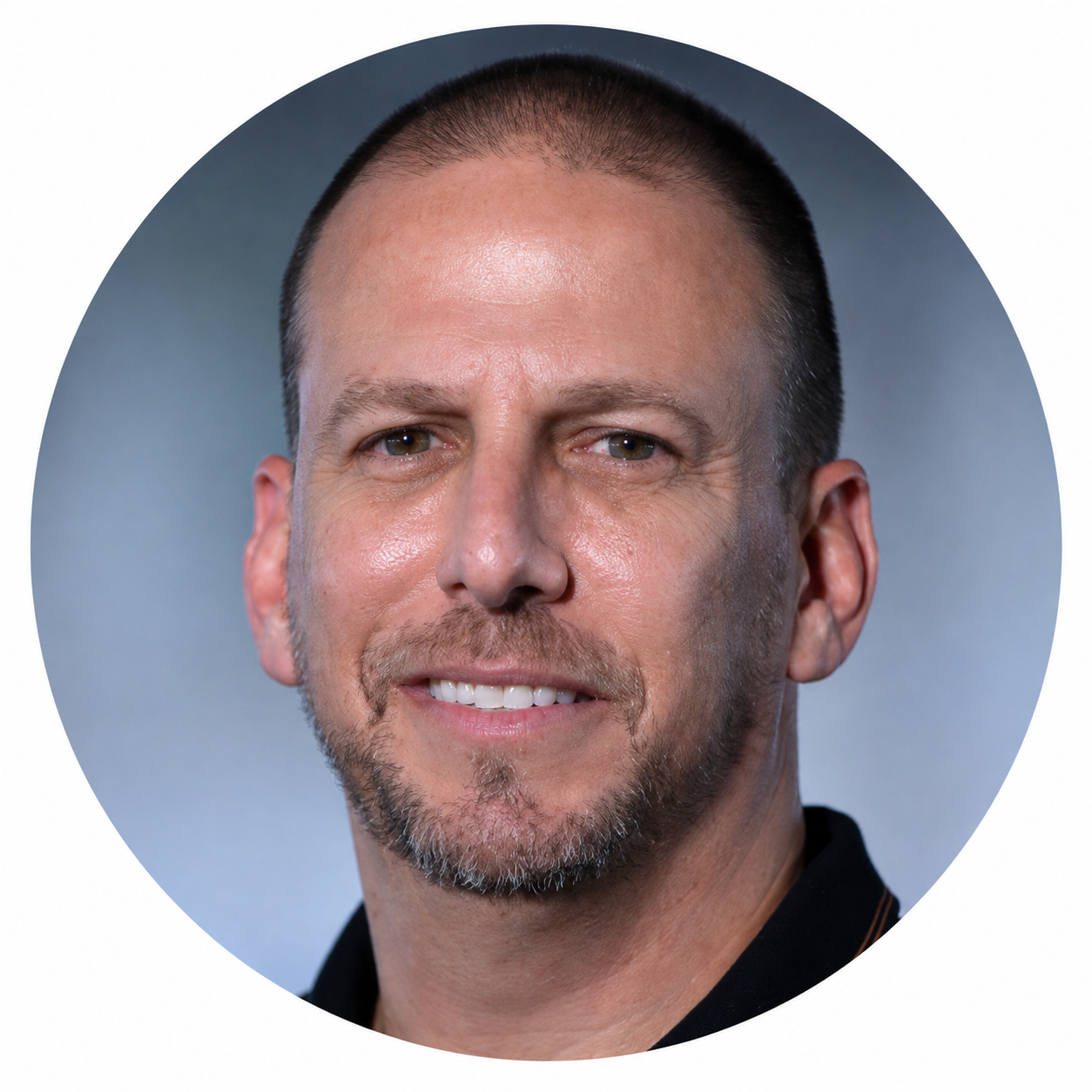
Renato Lerner
Founder, Elevare™
Renato Lerner has 30 years of experience in construction in Brazil, Angola, and the United States. He is the founder of Elevare™ and creator of the Organizational Capability Diagnostic.